
Who is asking, and why you
Behind the Düsseldorfer Freizeit- und Kulturpanel stands a single person: Christian Sondergeld, a sociologist in Düsseldorf (more about the researcher). He conducts the survey privately — at his own expense, on his own responsibility and with personal liability. There is no company behind it and no client.
The aim is to measure who uses leisure and cultural offers, who does not — and whether institutions and the public look past each other. A great deal is decided about culture, leisure and life in the city — programmes, opening hours, locations and priorities. Those affected by it have so far rarely been asked systematically. That is precisely what this survey sets out to remedy.
Why you? Your address comes from a random sample. A mathematical procedure drew a limited number of addresses from the official geodata of the State of North Rhine-Westphalia, and yours was among them. We did not select you because you are interested in culture or have left your details somewhere.
That is the heart of the method: only if every address has the same chance of being drawn do the results allow conclusions about the population of the city district surveyed — and, once the survey is extended, about the city as a whole. That is also why nobody can take your place — every refusal makes the picture a little less accurate, particularly for groups that rarely answer anyway. Your participation is nonetheless voluntary.
The study at a glance
- Aim
- To measure who uses leisure and cultural offers, who does not — and whether institutions and the public look past each other
- Client and analysis
- There is no client. Christian Sondergeld collects and analyses the data himself; no public bodies, companies or sponsors are involved.
- Conducted by
- Christian Sondergeld as a private individual, financed from his own funds
- Survey phase
- Pilot study in city district 1. Extension to all ten city districts is planned; the analysis of the pilot study will determine its timing and scope.
- Sample
- Stratified cluster sample drawn from official geodata of the state of North Rhine-Westphalia, modelled on the procedure of the German Mikrozensus · 2,300 sampling districts city-wide, 364 of them in the pilot study in city district 1
- Field period
- from October 2026
- Modes of response
- Online questionnaire. Anyone unable to take part online gets in touch with us
- Participation
- Voluntary, with the access code from the letter, without registration
How the study proceeds
-
Design
Developing the questionnaire, testing it and aligning it with the sampling plan. This phase settles what is asked — and what deliberately is not.
-
Public announcement
The survey is announced before the letters arrive. Those who have heard beforehand what it is about are less likely to throw the letter away unread — and can more easily tell a genuine announcement from an attempted fraud.
-
Fieldwork
The selected households receive their letter with an access code and complete the questionnaire online. Anyone unable to do so gets in touch with us.
-
Communicating the results
The analysis is published — under Articles and in the results report. Aggregated analyses are then also available to cultural institutions, leisure providers and municipal bodies, in part for a fee; individual answers are never part of them.
Neutrality and self-restraint
A survey that asks about culture and leisure touches on areas where people hold very different convictions. Hence three commitments by which we ask to be judged.
Neutral in worldview and party politics
The panel represents no ideological position and is close to no party, no church, no association and no interest group. It is funded by no political body and commissioned by none.
That the questionnaire nevertheless asks about political attitudes is no contradiction: in social research such information consists of ordinary characteristics that make differences between groups visible in the first place — just like age, education or length of residence. They are analysed, not judged. Answering this block of questions is voluntary and it can be skipped without making your participation incomplete.
No interference with artistic freedom
The survey describes the conditions under which cultural offerings are used or left unused. It derives from this no recommendations about what should be performed, shown or exhibited. What an institution makes of a finding is its artistic decision and remains so.
The freedom of the arts under Article 5(3) of the German Basic Law is not a matter to be justified or limited by survey data.
No educating of audiences
The panel is not trying to get anyone into the theatre. Someone who uses no cultural offerings has, in this study, no deficit to be remedied — they have reasons, and understanding those reasons is the actual purpose. Not going is just as valid an answer as going, and it is taken just as seriously in the analysis.
That is why the questionnaire contains no appeals, no references to events and no offers. It asks; it does not advertise.
When your district is surveyed
The survey begins as a pilot study in city district 1 and does not run everywhere at once. What is surveyed where and when is published here in advance — so that you can check whether a letter in your district is plausible at all at that time.
For the remaining city districts no month has been fixed yet. It will be published here before any letters are delivered there. Conversely: if no month is listed here for your district, no letter will come from us.
The sampling districts column shows the sample as it was drawn on 11 August 2026, in a single draw for the whole city area — 2,300 sampling districts spread across the ten city districts. It is listed here so that the scale can be checked. It is not a commitment to survey a district — only the survey column says that.
| City district | Survey | Sampling districts |
|---|---|---|
| District 1 | October 2026 | 364 |
| District 2 | not yet scheduled | 244 |
| District 3 | not yet scheduled | 489 |
| District 4 | not yet scheduled | 158 |
| District 5 | not yet scheduled | 105 |
| District 6 | not yet scheduled | 218 |
| District 7 | not yet scheduled | 154 |
| District 8 | not yet scheduled | 195 |
| District 9 | not yet scheduled | 302 |
| District 10 | not yet scheduled | 71 |
| Total | Wave 1: city district 1 first | 2,300 |
You can look up which district is yours at the City of Düsseldorf. Officially, the ten districts carry numbers only.
The plan states how many sampling districts fall to a city district and when it is surveyed — not which addresses receive a letter. That is decided by the random procedure alone. The plan therefore does not tell you whether your address is included.
And the two number columns say different things. The sampling districts are fixed — they come from the single draw of 11 August 2026. The survey is a decision, and so far it has been taken for city district 1 only. A number in the table for a district therefore does not mean that a survey will take place there.
The reverse, however, is strict: where no month is listed here, no survey takes place. A letter invoking this survey that arrives in a city district without a published month is not from us.
And it changes nothing about the most important rule: the access code arrives by post only. An email invoking this survey is not from us — not even if the month it names fits the plan.
What happens to your answers
Your answers are combined with all the others and analysed only in that form — as proportions, averages and comparisons between groups. Individual questionnaires are neither published nor passed on.
What exactly is collected, how long it is kept and who analyses it is set out under Data. The legal statements are in the privacy notice.
What this survey is not
- Nothing is sold to you and nothing is advertised.
- Your invitation arrives by post, never by email; we never ask for bank details, passwords or identity document numbers.
- There is no prize draw and no reward — your participation is not meant to be bought.
- Your address data is not passed on and not used for other purposes.
On this page
Your contact
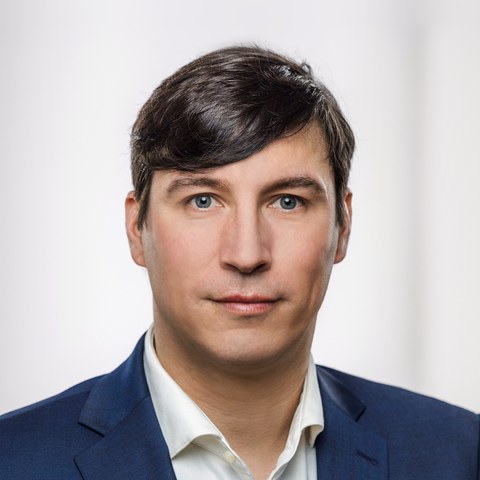 Christian Sondergeld
Head of the study
Christian Sondergeld
Head of the study
sondergeld@duesseldorfer-kulturpanel.de
We never send your access code by email and never ask for bank details or passwords. The code arrives by post only.
Already have an access code?
Go to the questionnaire