
In brief
I am a sociologist and I run this survey. In 2012 I stood on stage at the Düsseldorfer Schauspielhaus for the first time as an extra, in Kafka’s The Trial — it turned into more than fifty performances. After the first few nights, though, the audience interested me more than the play: who was sitting there, who was plainly not there, and why.
A year later I carried out my first audience survey at the same theatre. It has stayed that way since. I have worked empirically ever since on the question of who uses cultural offerings, who does not — and what that says about a city.
Academic background
I am completing a doctorate at the University of Duisburg-Essen. The panel is not part of that project — though I do analyse a section of the results for the thesis as well. The university is neither the sponsor nor the client of the panel, does not fund it and receives no data; as a purpose of processing this is set out in the privacy notice.
I have worked empirically on the use of cultural and leisure offerings for more than ten years. From 2018 to 2022 I worked on the Cologne High School Panel (Kölner Gymnasiastenpanel) — one of the few German long-term studies that follows the same people across decades. I was responsible for fieldwork, questionnaire, interviewer training and data preparation.
That is why I trust myself to run a panel across several waves: I learned how before I started one of my own.
Verifiable
- Journal article 2025, openly accessible: Birkelbach, Meulemann, Sondergeld and Witt, “Private Life Preference and Life Satisfaction”, Applied Research in Quality of Life 20, pp. 1139–1162 — doi.org/10.1007/s11482-025-10445-x
- Conference paper at ESRA 2019 in Zagreb on fifty years of the Cologne High School Panel
- Member of the German Association for Market and Social Research (BVM) and therefore bound by its professional code
What I research — and what I want from it
Decisions about culture are made on the basis of visitor numbers. Those show who came. They do not show who would have liked to come and what stood in the way — the price, the time of day, the journey, the sense of not belonging there.
My suspicion is that institutions and audiences look past one another: every institution has a picture of who it is there for, and every person has a sense of whether they are meant. Where the two come apart, people stay away — even when time, money and interest would be there.
That is why I ask the people who live here — and why it is repeated over years. A one-off survey shows a state of affairs, but no change. The question behind it is what significance fleeting forms of community, of the kind that arise around leisure and cultural offerings, hold for cohesion in this city.
Audience research is my profession, and after the first wave I intend to build a company out of it. It would be disingenuous to claim here that the panel has nothing to do with that. It does: analyses are to be derived from its aggregated results and offered commercially in future — to cultural institutions, leisure providers and municipal bodies. That is stated in the privacy notice, and it is stated there because consent is only valid if it knows the intentions that already exist at the time of collection.
What does not happen — and you may hold me to this:
- No client, not even after the fact. Nobody commissioned this survey, nobody is paying for a particular result, and nobody can buy their way into the questionnaire, the analysis or the publication.
- What is sold is analyses, not answers. Your individual responses and your address are never part of any offering — neither singly nor as a data set, neither for a fee nor for free.
- No commissioned study for a single institution and no exclusive access. Whatever is offered is open to everyone on the same terms; the results are published in full in any case — whatever they turn out to be.
- I am the sponsor and data controller as a private individual. Should the panel ever pass to a company, I would ask you first — without your explicit consent a transfer of the data would not be lawful in any case.
The distinction that matters is not “earns money” versus “earns none”. It is: what does the result depend on? As long as nobody is paying for a particular finding, and as long as everyone gets to see the same thing, the survey stays independent — even if it one day pays for itself.
Academics who support the design of the survey with their names, and Düsseldorf institutions that welcome it taking place, are listed under Voices on the panel — the commitments are currently being gathered — together with what this support means — and what it expressly does not mean.
What you can expect of me
- I do this privately and am personally liable for it. No company and no client stands behind this survey. I fund the survey from my own means, conduct it myself and analyse it myself — as also stated under The study.
- Your individual answers are never sold and never passed on — neither to cultural institutions nor to advertisers, neither singly nor as a dataset. What comes out of the study are aggregated results: proportions, averages, comparisons between groups. Such analyses are intended to be available to cultural institutions later, including for a fee. No individual is identifiable in them, and your address is never part of them.
- The results will be published in full — whatever they turn out to be. They appear under Articles and in the results report.
- You reach me directly. The number beside this text is mine, not a hotline’s.
What the survey investigates is set out under The study; what happens to your answers, under Data. Provider details are in the legal notice.
On this page
Your contact
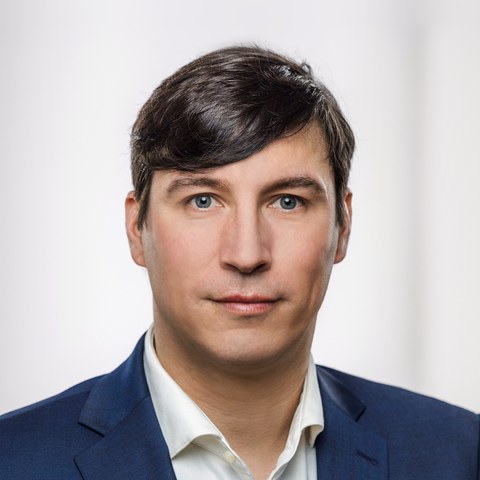 Christian Sondergeld
Head of the study
Christian Sondergeld
Head of the study
sondergeld@duesseldorfer-kulturpanel.de
We never send your access code by email and never ask for bank details or passwords. The code arrives by post only.
Already have an access code?
Go to the questionnaire