
Here we report on the state of the survey and on changes to the portal — from the opening of a new wave to maintenance work. The newest entry is at the top.
This page is the only way we reach you between two letters. There is nothing to sign up for and you will receive no newsletter from us. Your access code arrives by post only — never by email.
2026
-
Field phase
The survey begins
On 9 October 2026 the pilot study in city district 1 begins. From that day the letters with the access codes are delivered there; as soon as your letter has arrived, you can take part here.
When the remaining city districts will be surveyed has not been fixed yet and will be published beforehand under The study. How participation works is set out under Tips; questions are answered by the Help Centre.
-
Questionnaire
The questionnaire for the pilot study is ready New
It is finished — and because nobody likes filling in something without knowing beforehand where it leads, a short summary is available from today: eight stages on a single page, without giving the questions away. From “who answers?” through journeys, neighbourhood and what holds you back, to doing things together and the details about yourself at the end.
The questionnaire is not a test and not a quiz. There are no right answers, and you may skip every single question. We are less interested in whether you go than in why or why not — and what would have to be different. Two specially protected topics are asked only with your express consent; without it your participation still counts as complete.
What the questionnaire is about PDF in English, 1 page, about 0.1 MB · as of September 2026 · German version
-
The project
Short portrait of the study
On a single page: what is being investigated, why it is a panel and not a one-off survey, who is behind it, what we ask of you and what we let ourselves be measured against. The short portrait is written for everyone who has received an invitation letter — to read, print or pass on to others in the household who would like to place the questionnaire first.
Two points in it matter enough to repeat here. The panel has no client: even the institutions that support it have no influence whatsoever on the questionnaire, the analysis or the publication. And it is carried out privately and from own funds — who is behind it is set out under Head of the study, and what happens to the answers in the privacy notice.
Download the short portrait PDF in English, 1 page, about 0.1 MB · as of September 2026 · German version
-
Method
How the sample is drawn
How does a private individual obtain addresses for a random sample, without a population register and without buying address lists? A one-page summary explains it: where the addresses come from — freely available official geodata of the state of North Rhine-Westphalia —, how chance selects by district, and why every residential address in the city has the same chance of being included.
Just as important is what is known about you in the process — and what is not: the address list holds only street, house number and district, names were never collected, and address and answers are kept apart. The page is written for everyone who received a letter; no prior knowledge is needed. The full procedural documentation is made available on request for scientific review.
Download the summary PDF in English, 1 page, about 0.1 MB · as of September 2026 · German version
-
Survey plan
The survey begins as a pilot study in city district 1
The first wave will not be surveyed across the whole city at once, but in a single city district first: 364 sampling districts in city district 1. The reason is methodological. The letter, the questionnaire, the response rate and the technology can be tested under real field conditions before the rest of the city is contacted — and a mistake then costs one city district instead of ten.
Extension to all ten city districts is planned; the analysis of the pilot study will determine its timing and scope. The plan is published under The study and is updated there before letters are delivered anywhere.
-
Portal
The survey portal goes online
This portal is reachable from today. It answers in advance the questions that arise when the letter lands: who is asking, what it is about, how long it takes and what happens to the answers.
Available at launch are the pages The study, Data, Technology and Tips, together with a version in Leichte Sprache and the privacy notice. The questionnaire opens at the start of the field phase.
-
Sample
Sampling completed
The address sample is in place: 2,300 sampling districts in Düsseldorf, drawn as a cluster sample from the official geodata of the State of North Rhine-Westphalia — 364 of them in city district 1, where the survey begins. No population register, no address trading, no names — which address receives a letter was decided by chance alone.
Where the addresses come from and what follows from that is set out in detail in the privacy notice.
-
Method
Study design settled
The survey design is fixed: an address sample modelled on the German Mikrozensus, a letter with an access code, and online participation with an individual access code. The study is set up as a panel with several waves.
That also settles the questionnaire in outline: a core module that stays the same in every wave, and changing additional modules. An overview is under The study.
-
Method
Theoretical assumptions formulated
At the outset stands the question of what explains cultural participation in the first place. The panel’s theoretical assumptions are now formulated: the use of culture is understood not as a matter of taste but as the outcome of socialisation, available time, knowledge of what is on offer, and experienced barriers to access.
From these assumptions follow the subject areas of the questionnaire — and the decision to survey not only visitors but the city’s population as a whole.
Your contact
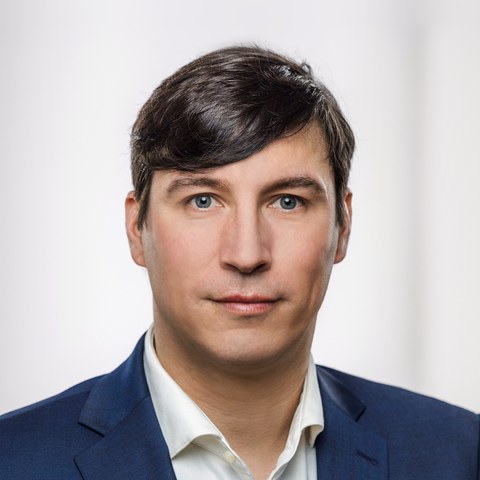 Christian Sondergeld
Head of the study
Christian Sondergeld
Head of the study
sondergeld@duesseldorfer-kulturpanel.de
We never send your access code by email and never ask for bank details or passwords. The code arrives by post only.
Already have an access code?
Go to the questionnaire